
Creating Change Without Power
Robben Island, South Africa
Power leadership seems to be all the rage these days. Leverage. Threats and intimidation. It is an effective way to get things done. Well, as long as you don’t mind the tremendous collateral damage to people and communities who don’t acquiesce.
Which brings up the question, how can someone without power exert influence? Can there be leadership without authority? I found a compelling answer to that question on a recent trip to South Africa.
After visiting Johannesburg and Cape Town, we took a ferry to Robben Island. Here Nelson Mandela was kept in solitary confinement for 18 of the 27 years he was held as a political prisoner.
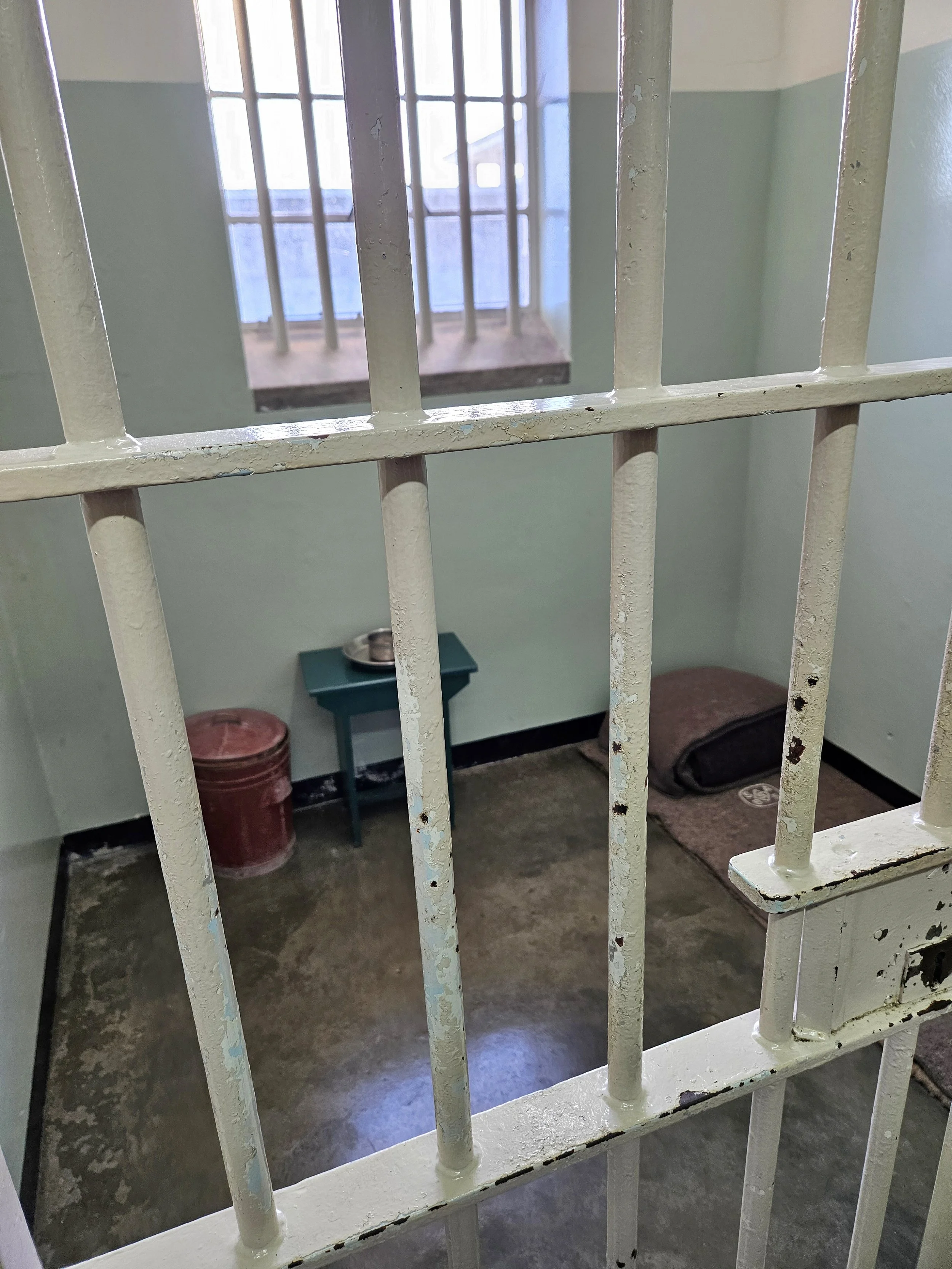
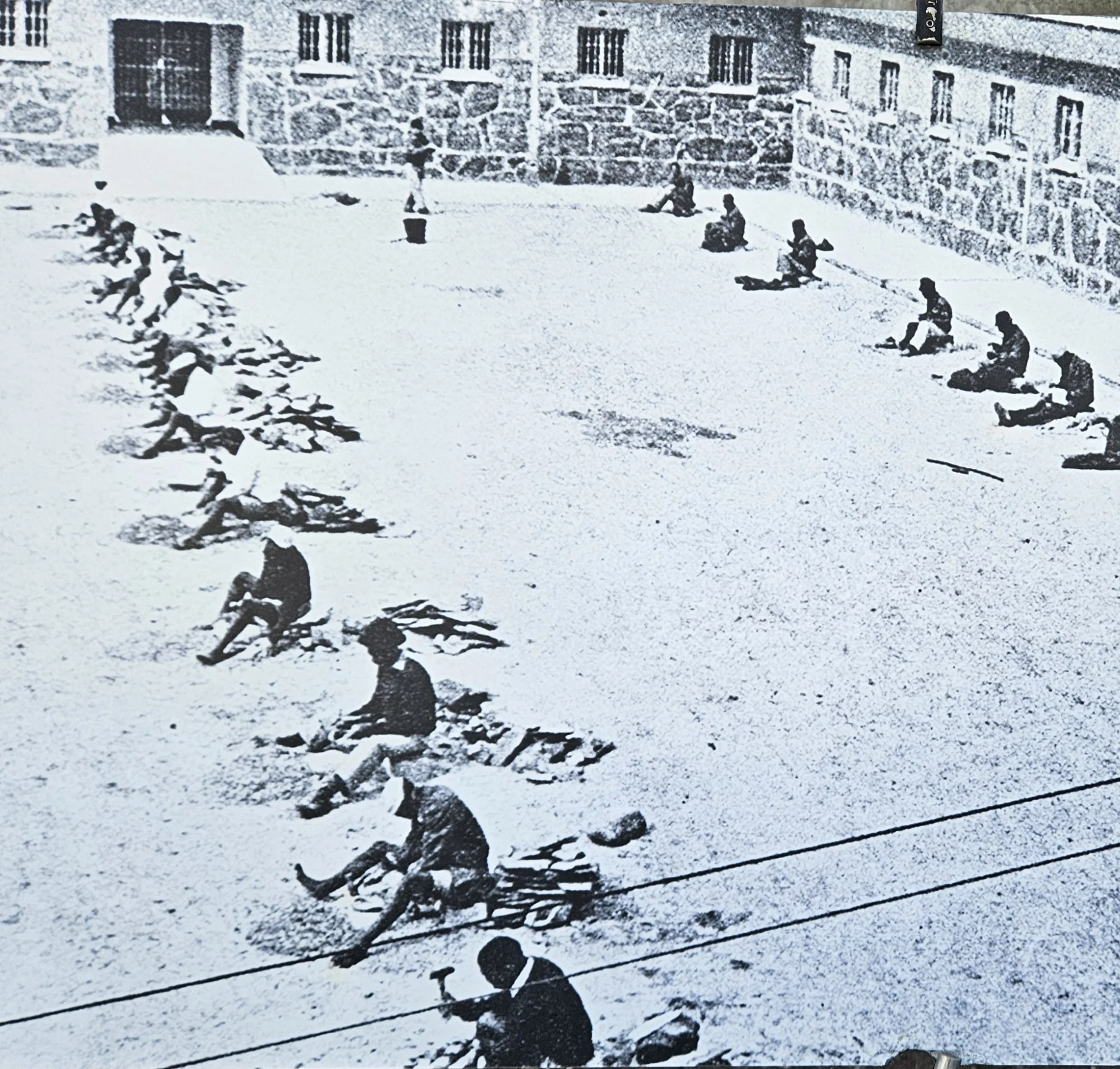
His story is truly remarkable. We walked by his cell, which couldn’t have been more than 6’ by 8’ with a sink and a mat to sleep on (see picture). He dug into the limestone for hours a day, which nearly blinded him.
Mandela endured such unjust and horrible treatment, he and too many others like him, and yet was able to emerge with grace, dignity, ready to lead a people and a nation. How?
His story really came to life for me in Dede’s story.
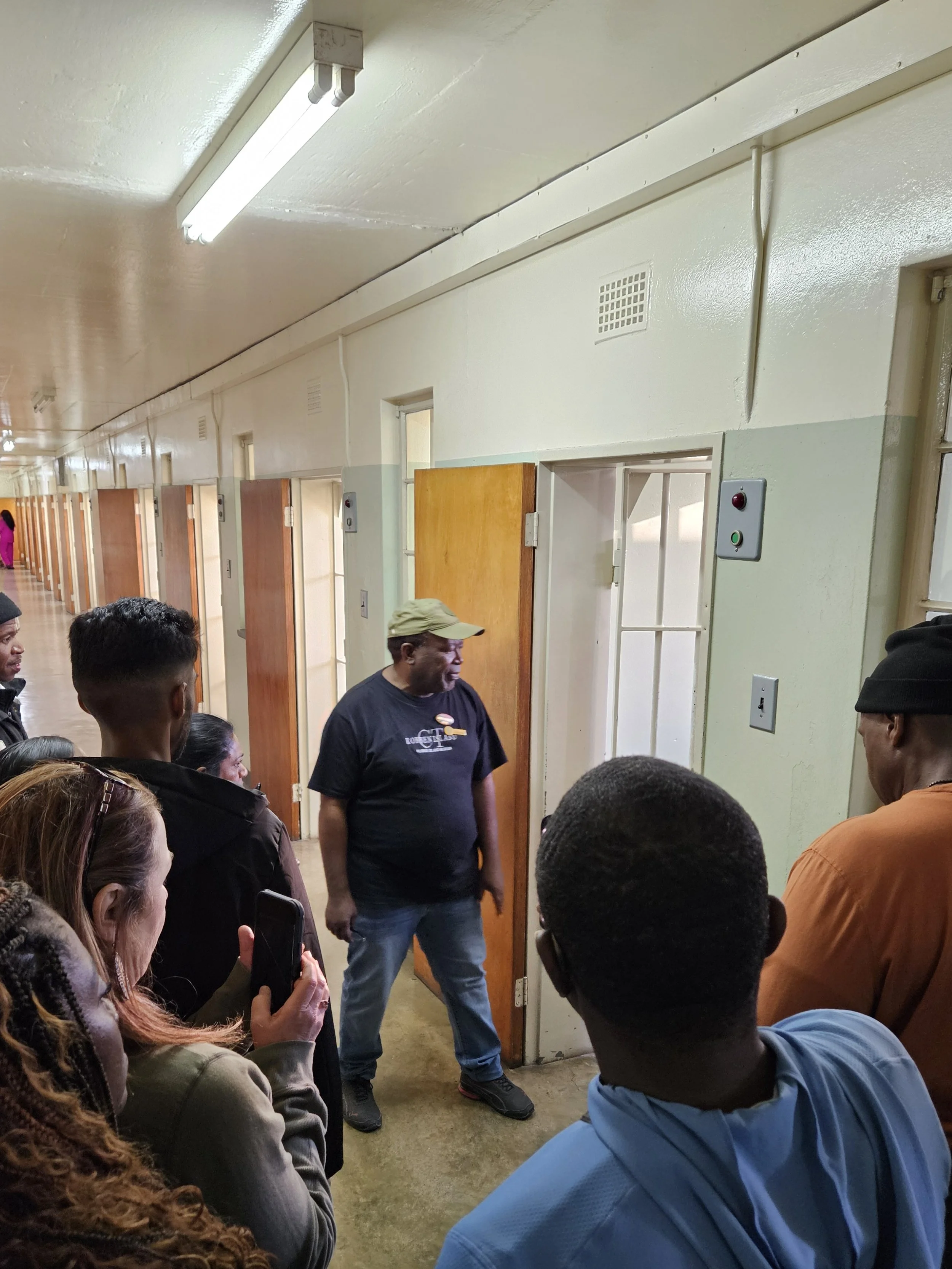
Dede, our guide at Robben Island, had been a political prisoner there with Mandela. We stood and sat and walked in rapt attention as he shared his personal stories from his seven years in confinement.
I took a very somber tone as we entered the prison. Dede did not.
He smiled. He joked. He told us about his first love inspired by a smuggled poster—Diana Ross. Such a dissonant chord, with beautiful notes playing in his voice on a dark and angry stage. I jostled to the front to hear more.
He shared how he and other prisoners earned college degrees from correspondence courses while imprisoned. They played scrabble and argued about words with a set of dictionaries opened around them. Some of the guards became less tense, and, over time, even sympathetic.
One such guard supplied magazines and newspapers (with all political content cut out) to the prisoners. It was just enough to show them the world was still out there and freedom might somehow be achieved in their lifetime. Hope. Dede smiled gently.
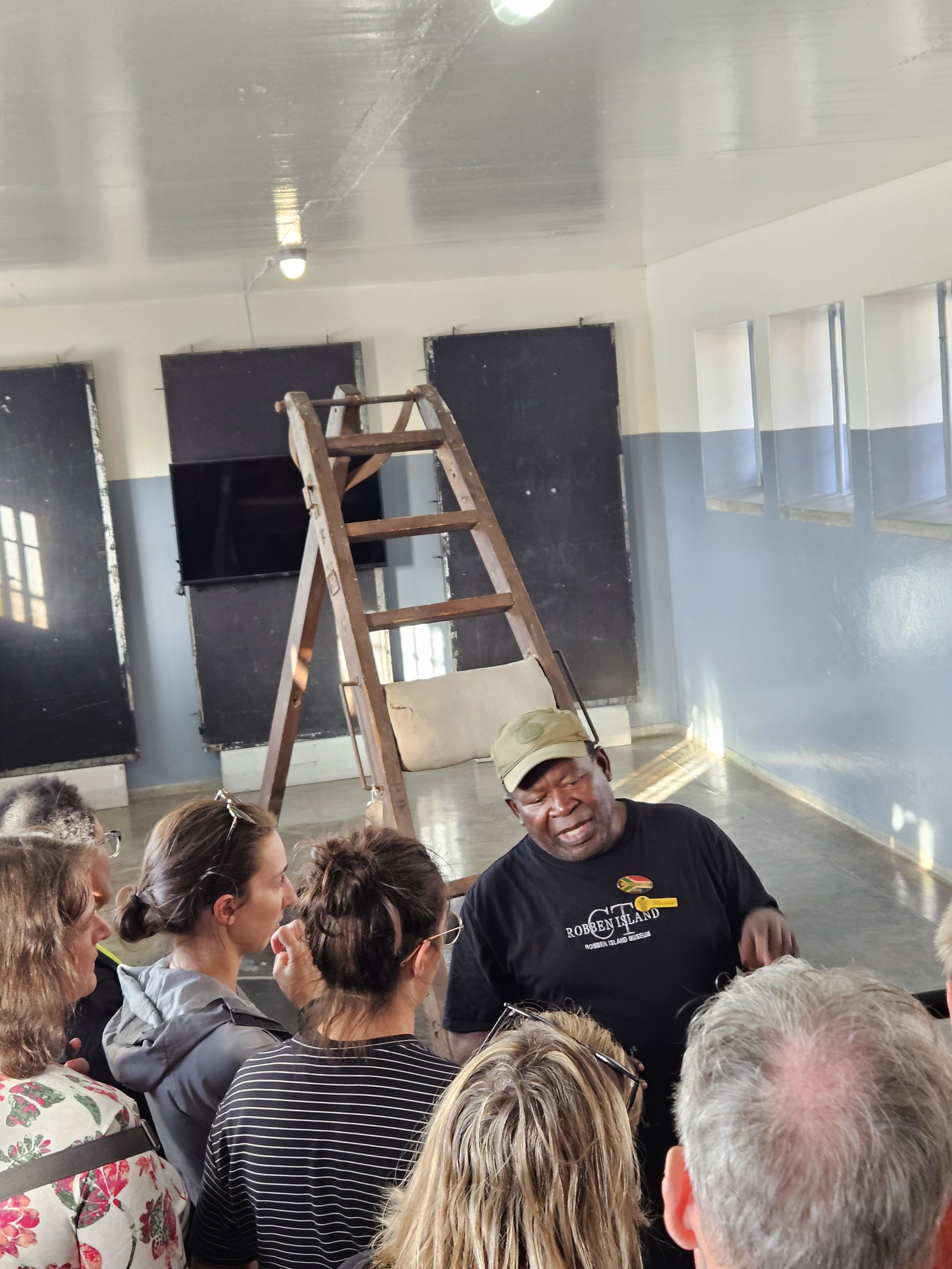
His bright voice dropped into a heavier place, however, when he talked about the punishments. The cruelest were the lashings, with men buckled to a wooden stand while they were whipped with straps doused in alcohol.
How can someone endure this kind of inhuman treatment and not descend into despair and hate?
Dede talked about Mandela and his quiet way of leading them by example. “With the passage of time you begin to see the humanness in others. That’s what Mandela taught us.”
He said he is now close friends with his most bitter enemy, a guard who “had it out for him.” They spend time together. Their families have BBQ together. Enemies who discovered something bigger than the forces that separated them.
Grace. Forgiveness. Empathy. Love.
When Mandela was first offered his freedom, he refused unless all the other prisoners were released with him. Then, in February 1990, they were.
What did Dede do when he was released? He said he went straight to Table Mountain, that pillar above Cape Town that they could see from their cells. They climbed. They cheered. Then they went to KFC!
I was so rapt by Dede’s stories. Even more, his spirit.
His is a crucible story. The way of Mandela. Christians know it as the way of the Cross. He chose that path and inspired a nation to face the truth and seek reconciliation. Change emerged from a place of no power. Or perhaps I’m wrong. Maybe the power of faith, hope and love is stronger.
The ancient forces of pride, hatred and corruption are ever at hand in South Africa, as they are around the world.
But there is light. It is the way of the cross. Crucifixion that leads to resurrection. May we find the way ourselves, and lead others through it.